The Fillmore: a neighborhood history
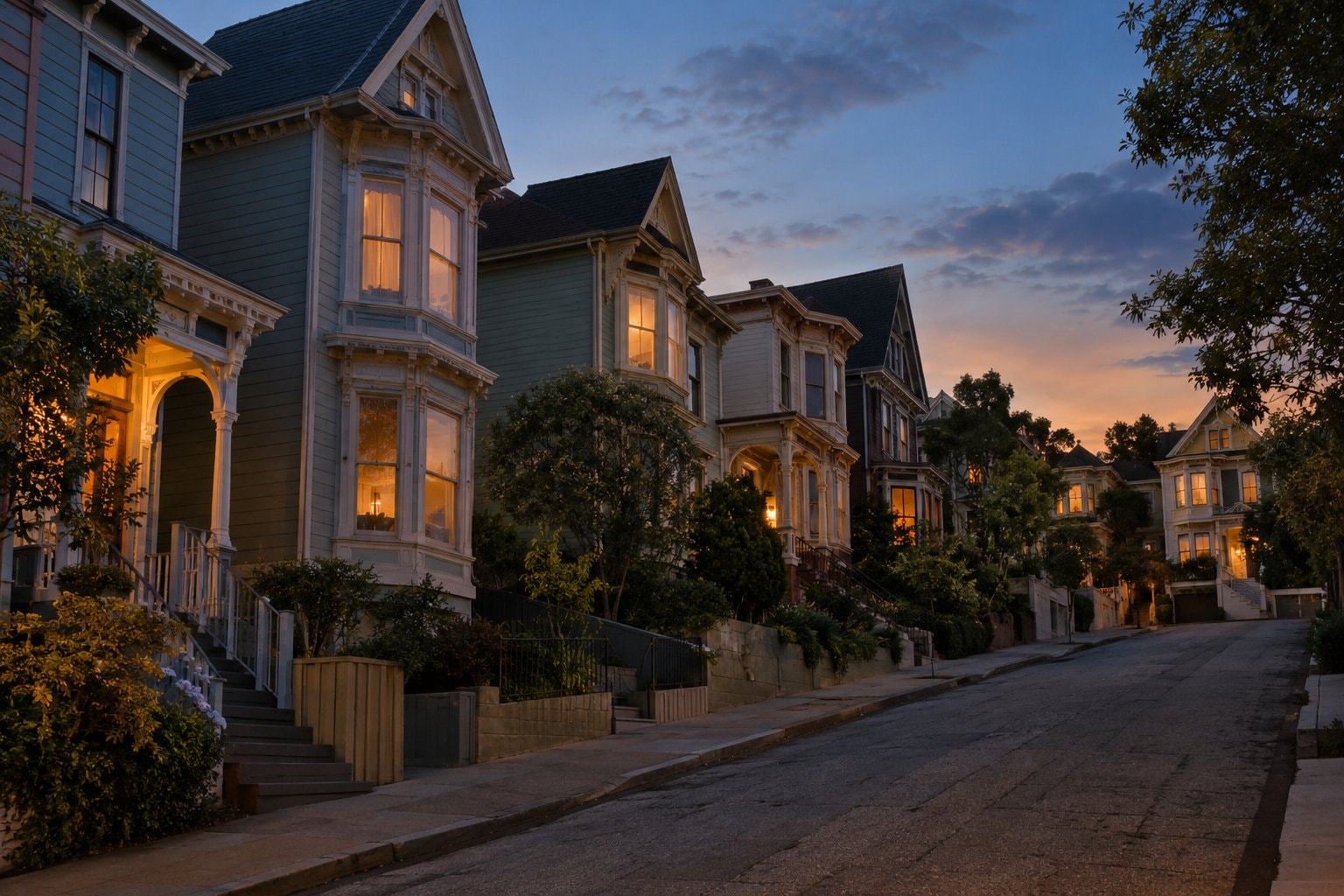
The Fillmore’s neighborhood history reaches beyond the clubs that made its name familiar to jazz listeners. Wikipedia’s account of the Western Addition distinguishes a broad historical area platted in the 1850s from the smaller neighborhood usually meant by the name. In its account, the district developed as a Victorian streetcar suburb and survived the earthquake with much of that architecture intact. Changing boundaries are part of the story: the same place-name has not always described the same piece of the city.
That wider frame makes it easier to follow communities moving into and through the district. Houses, businesses, religious institutions and music rooms belonged to the same streets, but different groups experienced those streets differently. The neighborhood’s history includes opportunities to settle and gather, as well as restrictions, forced removal and displacement. Its jazz years are one major chapter within that longer account, not the point at which the neighborhood began.
Side A
Earthquake and a new center of city life
Wikipedia’s account of the 1906 earthquake describes the earthquake and the extensive fires that followed in San Francisco. Their destruction changed where people could live and conduct business. The Western Addition’s comparatively intact Victorian streets became part of a changed city. Communities displaced from other areas found new settings there, while the Fillmore developed a commercial and cultural importance different from the one it had held before the disaster.
FoundSF’s account of the Jewish Fillmore describes families displaced from South of Market settling around Fillmore and McAllister. Synagogues, food businesses and social spaces helped make a dense neighborhood. The history is taken further on the Jewish Fillmore page. Looking at those institutions alongside homes shows how a change in residence could also produce a new center of community life.
Japantown, removal and return
The Japanese community also moved west after the earthquake. FoundSF’s account of Nihonjin-Machi describes a Japanese quarter South of Market and its relocation to the Western Addition after the disaster. Businesses and institutions gave the new area a cultural identity, while its streets sat within the larger neighborhood. The history of Japantown and the Fillmore follows that movement and the later events that radically changed the community’s presence there.
The forced removal and incarceration of Japanese Americans emptied homes and businesses. FoundSF’s wartime history places the arrival of Black workers within that altered housing landscape, while also emphasizing the discrimination that restricted where those newcomers could settle. These linked histories should be told plainly. The vacated housing was the result of an injustice against Japanese Americans; the newcomers’ concentration in the Fillmore also reflected racial barriers elsewhere in the city.
FoundSF’s Western Addition history describes Japanese Americans returning after the war and facing difficulties finding housing and work. Return was a process of resettlement, not a simple continuation of the neighborhood as it had existed before removal. The Japantown detail page therefore continues through return, later redevelopment and redress. That longer view keeps the wartime interruption within a community history that began before it and continued afterward.
The shipyards and wartime migration
FoundSF’s account of Hunters Point shipyard workers links Black migration from the South to the region’s expanding defense industries. It describes recruitment and word of mouth bringing workers west, with shipbuilding and repair changing San Francisco’s population. Hunters Point was part of a larger network that included yards in Richmond, Sausalito, Oakland and Vallejo. The neighborhood’s wartime growth therefore belonged to a regional employment story, even where the resulting community life took a distinctly local form.
Hunters Point and Marinship in Sausalito illustrate different parts of that industrial setting. The former was a naval yard; Marinship built vessels for the wartime shipping effort. Housing and employment remained tied together throughout the migration story. Work could draw people to the Bay Area while discrimination constrained where they could make homes. Reading those conditions together helps explain why cultural life became concentrated in particular neighborhoods.
Side B
Jazz within the neighborhood
FoundSF’s account of the Fillmore as a cultural capital describes a Black neighborhood where restaurants, theaters and nightclubs worked alongside one another. The clubs were part of a wider pattern of daily and social life. Bop City’s back room was one place within that network, joining local musicians and visitors in late-night sessions. Its history connects a small performance space to the changing community around it.
Other institutions carried different forms of cultural life. Wikipedia’s account of Marcus Books describes a community space centered on African American literature, history and culture. Its account of the St. John Coltrane African Orthodox Church describes a Christian congregation centered on the saxophonist’s music. Books and religious practice belong to different activities from a nightclub, yet both show why the neighborhood cannot be understood through venues alone.
Displacement, buildings and recognition
Urban renewal changed that network as well as the buildings. The redevelopment page follows displacement, opposition and the movement of Victorian houses. FoundSF’s account of the moved houses emphasizes that relocation could save a building without preserving the character of the surrounding area. This is a particularly useful distinction in the Fillmore, where a house associated with a jazz club later became associated with a bookstore.
In Wikipedia’s Fillmore District history, the creation of the Historic Fillmore Jazz Preservation District belongs to efforts in the 1990s to encourage entertainment and commercial activity associated with the area’s musical past. The later Fillmore Heritage Center belongs to that chapter. Reading it after the earlier neighborhood history keeps recognition and redevelopment in proportion: a later institution can invoke the district’s music, while the history still has to account for the people and places that made it.