Jazz and poetry in San Francisco: the Cellar, Rexroth and the Beats
Jazz and poetry meet in several ways. A poem can make jazz its subject, borrow a sense of musical rhythm or be read with live accompaniment. Those relationships should not be collapsed into a single formula. A poem about a musician need not include a band, while a reading with musicians asks voice and instruments to share a performance. San Francisco's Cellar provides a documented local setting for that encounter. Kenneth Rexroth's work and the city's Beat culture supply a wider literary context, without making every writer or every reading part of the same movement.
What makes poetry “jazz”?
Wikipedia's account of jazz poetry describes poetry with jazz-like rhythm or an improvisatory feeling, as well as verse concerned with the music, musicians and their surroundings. It also records disagreement over whether the term names a distinct genre or describes a set of qualities. That disagreement is useful. It keeps the label from becoming a shortcut that claims too much about how a poem was written or performed.
The article places the form's beginnings among African American writers and traces its later adoption by counterculture poets. San Francisco's poetry-and-jazz performances were therefore part of a longer relationship between Black music and literature. They did not create that relationship from nothing. The account of jazz styles and improvisation offers musical context for terms that can otherwise become loose metaphors when applied to writing.
Rhythm on a page and rhythm in a performance are related but distinct. A reader can notice repeated phrases or changes in emphasis without assuming that the poem follows a particular musical structure. Likewise, the presence of instruments does not by itself establish how much of a performance was improvised. A precise description begins with the documented form of the encounter rather than with a general claim about spontaneity.
The Cellar on Green Street
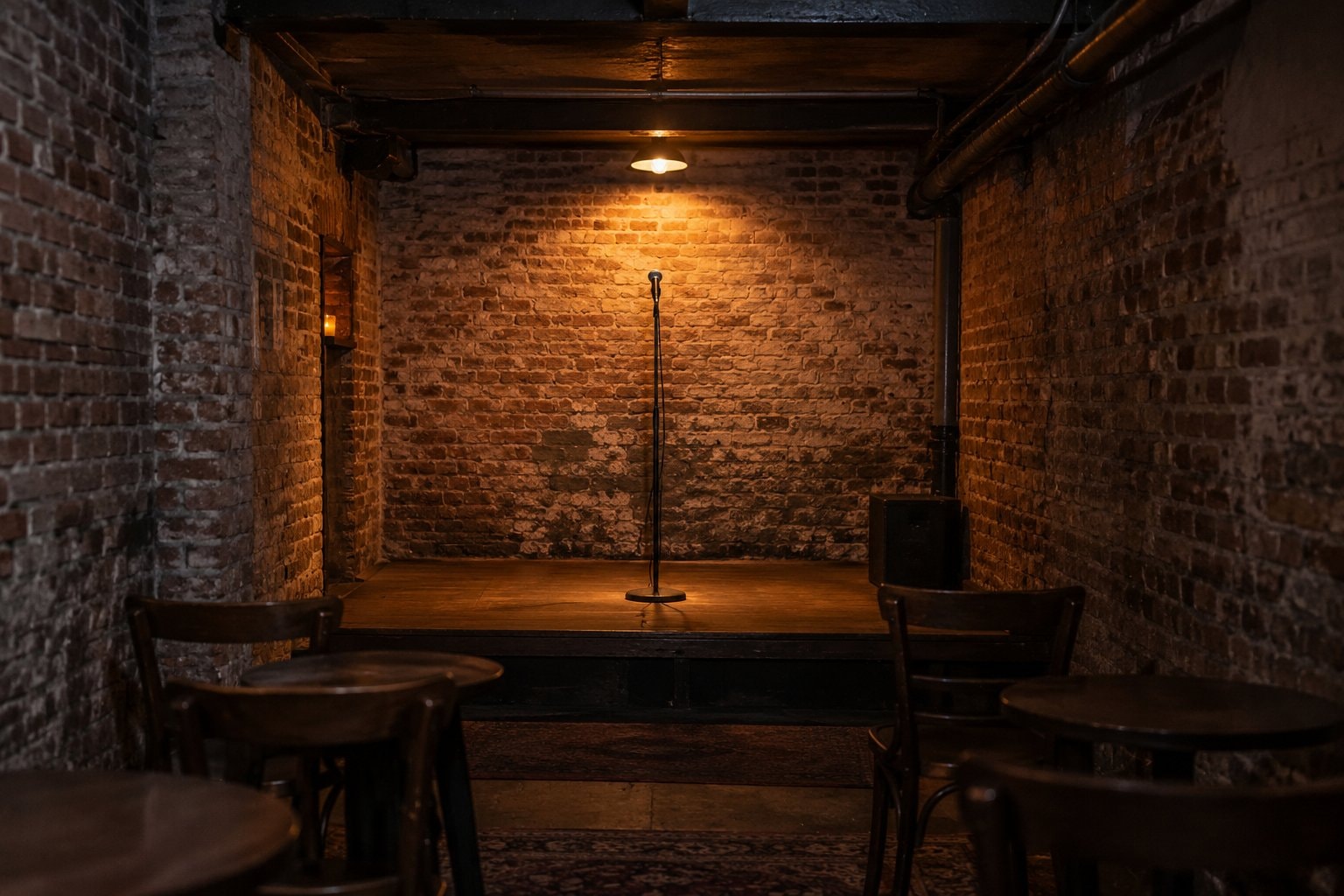
FoundSF's history of the Cellar identifies the Green Street venue as a setting for poetry read to jazz. It records an LP made there featuring poets Lawrence Ferlinghetti and Kenneth Rexroth. The room and the recording connect a local performance practice with a form that could circulate beyond the club. A spoken poem, musical accompaniment and a listening audience came together in a named San Francisco setting.
The account is especially useful because it supplies a concrete place for a subject that can sound abstract. “Jazz and poetry” might otherwise suggest a broad cultural mood. The Cellar makes the relationship specific: poets took part in performances, and a recording carried those performances into another setting. The North Beach and Tenderloin jazz history places that room within a wider network of clubs and musical life.
A recording also changes how such a performance can be approached. The listener can consider the words and the instrumental accompaniment as parts of the same presented event. That does not settle every question about preparation or interaction. It does give the event a form beyond the recollection that a poetry reading once took place in a jazz room.
Rexroth and the San Francisco Renaissance
Wikipedia's biography of Kenneth Rexroth identifies him as a poet, translator and critical essayist central to the San Francisco Renaissance. It also explains that he did not consider himself a Beat poet and disliked that association. This distinction is essential to an accurate account. A writer can contribute to the setting in which a movement develops without accepting its label as his own identity.
Rexroth translated poetry from Chinese, French, Spanish and Japanese, as the biography records. His documented roles therefore extend beyond the image of a poet at a microphone. Translation and criticism were also parts of his literary work. That range helps place his participation in poetry-and-jazz performance within a larger career of reading, writing and interpreting other forms of expression.
FoundSF's publication of his essay on nightclubs shows another point of contact with jazz. Rexroth discussed the hungry i and Black Hawk in relation to modern jazz, contemporary commentary and singers attentive to their material. The piece is a writer's appraisal of entertainment culture. It shows that the setting around the music could interest him as a subject of criticism, as well as a place where poetry might be performed.
The Beats and a shared city
Wikipedia's account of the Beat Generation describes a literary movement concerned with nonconformity and spontaneous creativity. Its San Francisco section places Rexroth within a social and literary setting that brought writers together, and records his role as master of ceremonies at the Six Gallery reading. That reading was a poetry event; it should not automatically be treated as a Cellar performance or as evidence of jazz accompaniment.
The distinction makes the connections more interesting. San Francisco offered rooms for discussion, readings, club performances and recordings. Writers and musicians could share parts of that city without every gathering taking the same form. The story of the Cellar belongs within that larger cultural setting, while its specific poetry-and-jazz practice remains worth describing on its own terms.
A useful history keeps the poem, the performance, the room and the recording in view together. It also leaves room for differences among writers and between literary movements. The broader work of keeping jazz history through oral accounts and collections can place such encounters beside other evidence of musical life. The result is a more precise account than a single image of the Beats listening to jazz.