Redevelopment: how urban renewal remade the Western Addition
Redevelopment changed the Western Addition’s buildings, streets and population. Wikipedia’s history of the San Francisco Redevelopment Agency describes an urban renewal agency active from 1948 to 2012, carrying out demolition and new construction in areas of the city. Its account also records criticism from communities whose residents and businesses were forced to leave. In the Fillmore, the history of those projects belongs alongside the history of jazz, because the music rooms depended on a surrounding neighborhood.
Side A
Urban renewal as an idea
Wikipedia’s account of urban renewal describes initiatives intended to change deteriorated urban areas through new infrastructure and construction, often after clearance. It also describes the displacement of low-income and minority communities as a recurring source of controversy. Those two sides are necessary to the Fillmore story: planners’ stated aims and the effects experienced by residents should not be collapsed into a single measure of success.
The national account places post-war American clearance within a wider pattern of replacing dense neighborhoods with planned housing and public spaces. A change on a planning drawing could therefore mean more than a new building type. It could change access to homes, businesses and gathering places. In a neighborhood known for jazz, the cultural consequences were bound up with those ordinary places, rather than confined to the loss of a particular stage.
Clearance and opposition
FoundSF’s history of moving Victorian houses describes redevelopment in the A-1 and A-2 projects, with the clearance of entire blocks followed by stronger opposition to a later phase. Its account connects that resistance to residents and advocates concerned about the neighborhood and its buildings. Opposition was part of the process, not merely a later judgment made after the work had finished.
FoundSF’s separate account of Fillmore redevelopment discusses planning documents that identified the Western Addition as a target and used racially charged language to describe it. That history is important when considering the category of blight. The label was applied by institutions with the power to alter the district; it was not an innocent description of everything that residents valued there. Homes, businesses and cultural relationships could be treated as obstacles to a different use of the land.
Wikipedia’s Fillmore District article describes residents and businesses being displaced, and opposition to both major projects. It records that many former residents could not return because the housing produced by redevelopment was more expensive. These are effects on a community’s ability to continue in place, not simply changes to the appearance of streets. The losses extended to the musical scene that had grown within that community.
Moving a house instead of demolishing it
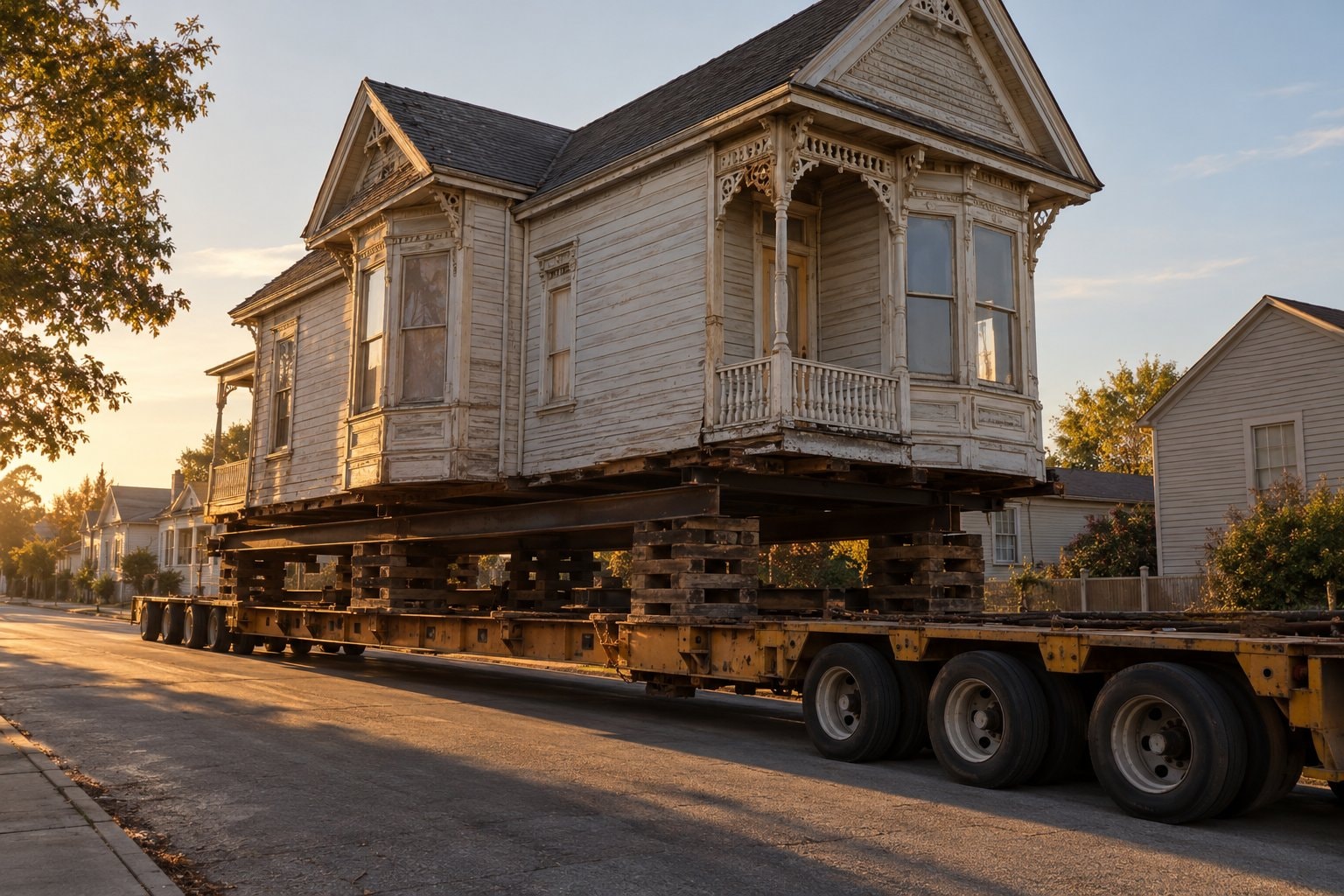
The house-moving account describes a shift toward conserving some Victorian buildings. Houses scheduled for demolition could instead be transferred to new locations, with new occupants taking responsibility for them. That approach saved selected structures, but it also changed where they stood and the surroundings in which they would be understood. Physical survival was a real outcome, while the relationship to an earlier street or community became more complicated.
FoundSF describes the moves as complex operations involving utility crews, overhead wires, streetlights and cleared routes. A house had to pass through the city as a large object before becoming a fixed part of another block. That practical detail helps explain the unusual appearance of some relocated buildings. Their continued presence can be read as evidence of conservation within a period otherwise marked by substantial demolition.
The same account is clear about the limits. Some buildings were moved to lots where other Victorians had already been demolished. Saving individual houses did not preserve the character of the whole area, and the people benefiting from those moves did not necessarily represent the displaced community. A favorable result for a building could sit beside a much less favorable result for the neighborhood’s earlier residents.
Side B
Bop City’s house and the lost room
The Victorian associated with Bop City is an example of that distinction. Wikipedia’s club history records that the house was moved, while the back room that had held the jazz club was demolished. Marcus Books later occupied the building. The Bop City page follows those separate histories. A surviving house can connect different forms of cultural life without containing an unchanged performance room from the past.
The Fillmore neighborhood history provides the wider setting: the communities that had made homes and institutions there, the wartime arrival of Black workers and the clubs around them. Those relationships help explain why demolition and displacement matter to a music history. A room’s walls and an address were only parts of its life; listeners, players and nearby businesses helped make it a musical place.
Later recognition of a musical district
Wikipedia’s account of the Fillmore District places the creation of the Historic Fillmore Jazz Preservation District within efforts in the 1990s to encourage entertainment and commercial activity associated with the area’s history. The later Fillmore Heritage Center belongs to that chapter. Recognition gave the musical past a role in a later development strategy, while the history of displacement remained part of the district’s story.
Reading the projects, the moved houses and the later district together shows several outcomes at once. Selected buildings continued in different settings. Many residents and businesses were displaced. Jazz remained an important way to identify the Fillmore’s cultural history. Those outcomes should retain their differences: conserving a house, recognizing a musical tradition and sustaining a community are related aims, but the sources describe different results for each.