Japantown and the Fillmore
Japantown’s relationship to the Fillmore began through movement within San Francisco. FoundSF’s account of Nihonjin-Machi describes a Japanese quarter South of Market, around Stevenson and Jessie streets, that was devastated by the earthquake and fire of 1906. The community then relocated to the Western Addition. That movement helps explain why Japantown belongs within the broader neighborhood history even while retaining a cultural identity of its own.
FoundSF describes immigrants making a cultural and economic center within the spaces available to them. The account follows changing physical places alongside the community’s history. That is a useful way to approach Japantown: streets and buildings matter because people used them for work, business and gathering. Their significance does not lie only in their appearance or in the name assigned to an area.
Side A
A neighborhood within the Western Addition
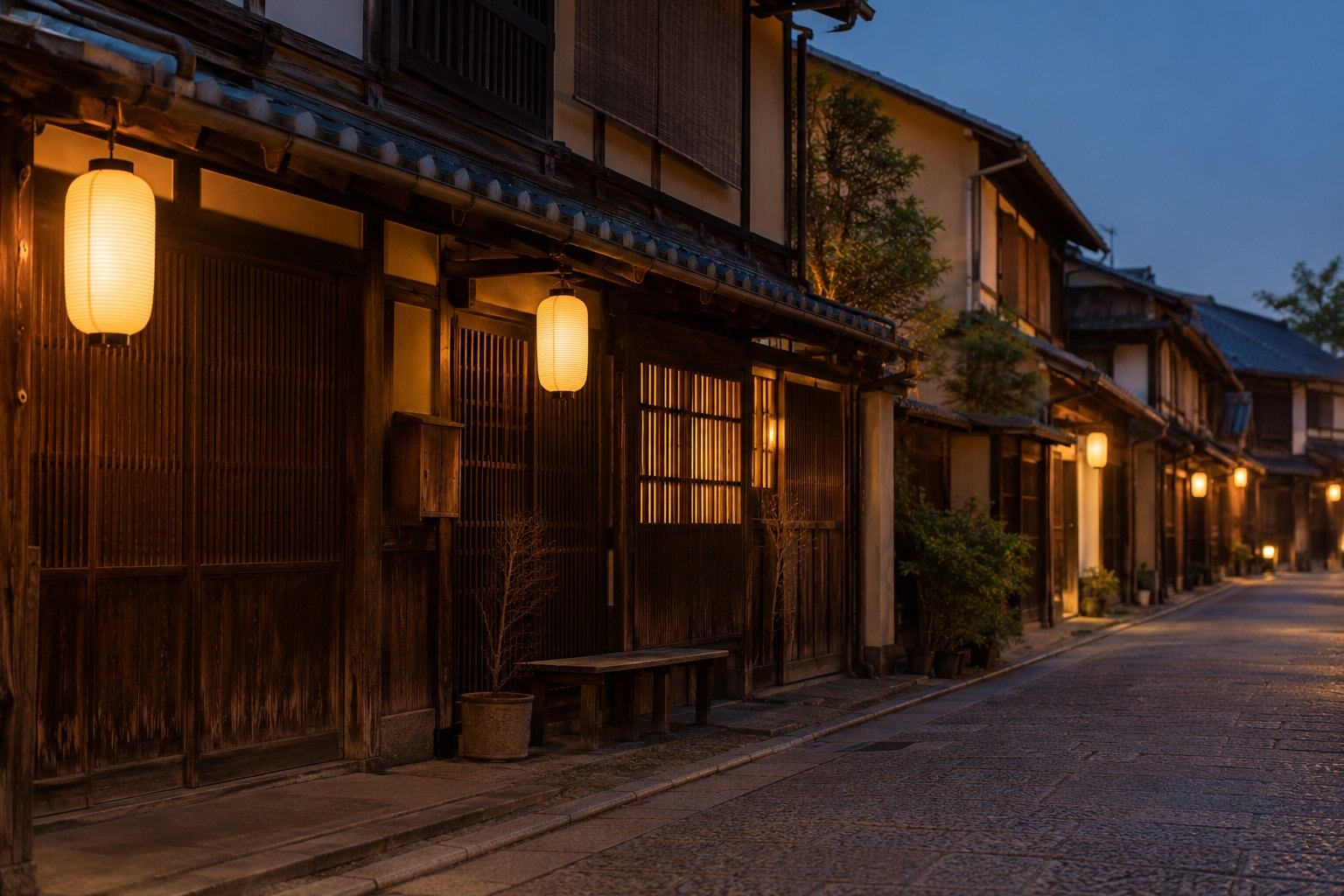
Wikipedia’s Japantown article locates its main thoroughfare on Post Street between Fillmore and Laguna, with the surrounding area within the Western Addition. Its historical account describes a substantial concentration of Japanese residents and businesses before removal. Looking at the neighborhood in that form brings homes and everyday institutions into view, rather than beginning with the later commercial complex that became its focal point.
The earlier settlement and the later district are connected, but they are not identical settings. FoundSF’s history follows a Japanese community displaced by the earthquake and making a new place in the western part of the city. The subsequent history includes growth, forced removal and a return into changed surroundings. Those movements make the relationship between a community and its buildings especially important here.
Forced removal and incarceration
The National Archives’ account of Executive Order 9066 records its issue on February 19, 1942, authorizing forced removal from the West Coast to inland relocation centers and resulting in the incarceration of Japanese Americans. Its account makes clear that citizenship did not spare Japanese Americans from removal. The action was a rupture in community life: people were forced from homes and livelihoods into confinement.
FoundSF’s history of the incarceration describes people being required to give up homes and belongings and move first into temporary facilities while inland camps were prepared. These were imposed conditions, not a voluntary change of neighborhood. Describing the process plainly keeps the coercion visible. The removal affected the practical places through which community life operated, as well as the people who used those places.
Wikipedia’s account of Japantown describes large parts of the neighborhood remaining vacant after the removal. Black workers arriving from the South for wartime industrial employment moved into the area. The experiences intersect in the same streets, but they have different causes and meanings. Forced incarceration explains the empty housing; wartime work and a migration to California explain the arrival of newcomers.
Side B
Return into changed surroundings
After the war, some Japanese Americans returned and new immigrants also arrived, according to the Japantown article. Many earlier residents instead settled elsewhere in San Francisco or in suburban communities. Return therefore did not mean that every former resident came back or that the pre-war neighborhood simply resumed. The community’s later history included both continuity and a different pattern of settlement.
Wikipedia’s Japantown history also connects later population changes to redevelopment and identifies the Japan Center, which opened in 1968, as a focal point of the neighborhood. Its account describes housing demolition and widened transportation corridors. The commercial complex belongs to that later change in the physical setting, rather than to the original quarter from which the community had moved after the earthquake.
The Japan Center article describes the complex as the Japanese Cultural and Trade Center when it first opened. Its setting between Geary, Post, Fillmore and Laguna places it within the same area whose residential fabric had changed through redevelopment. The redevelopment page considers that larger process, including the distinction between saving particular buildings and keeping a neighborhood’s social life intact.
Redress and public acknowledgment
The later history includes an acknowledgment of the injustice. The National Archives’ account records that a law enacted in 1988 apologized for the incarceration and provided partial restitution. Its description places that law after investigations and recommendations by a congressional commission. Redress did not undo the removal or recreate the pre-war neighborhood; it formed a later public response to what had happened.
Wikipedia’s account of Japanese American redress describes a movement involving community organizations, public testimony, legislation and court cases. Read beside the neighborhood’s physical history, it adds another kind of record: the effort to have the wartime injustice recognized. The subject extends beyond the Fillmore, while remaining essential to understanding the community history told here.
Continue with the Fillmore neighborhood history for the intersecting communities, or with Asian American jazz in the Bay Area for a different cultural subject. Those connections leave Japantown’s history in its own terms: settlement and community institutions, an imposed removal and incarceration, a varied return, changes to the built neighborhood and a later movement for redress.