Jazz on film: soundies, shorts, features and documentaries
Jazz on film includes several different ways of presenting music. A short can concentrate on a song or an ensemble. A feature can make performance part of a fictional story. A concert film can show musicians alongside an audience, while a documentary can arrange performances, photographs and interviews into a historical argument. Each form gives access to something the others may leave aside. The useful starting question is how the film was made: as a musical scene, a staged performance, a record of a gathering or an explanation of the past.
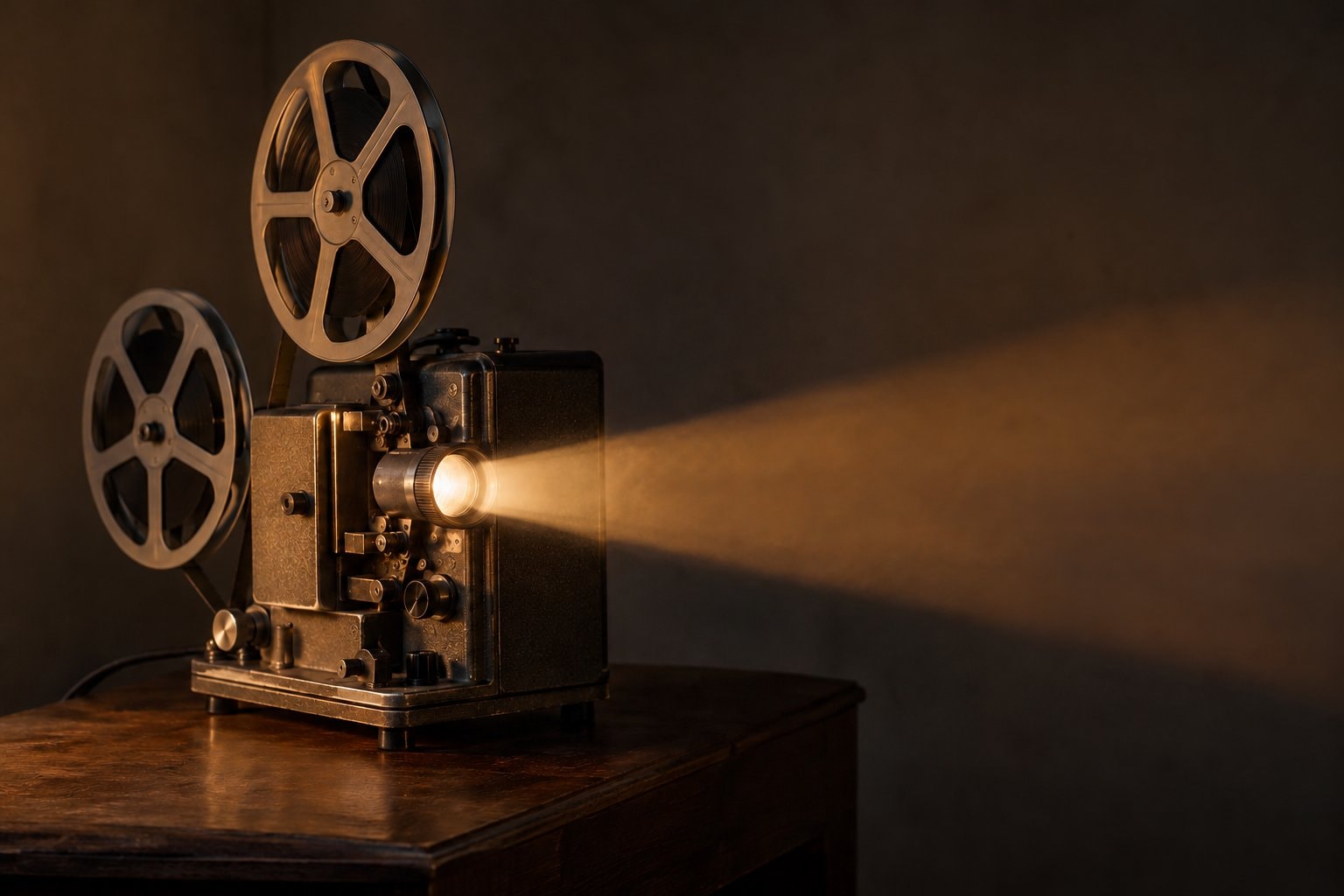
Soundies and the musical short
Wikipedia's article on soundies describes short films pairing a musical performance with its sound. These films circulated through projection machines in public places, including nightclubs and restaurants. They covered many musical genres rather than jazz alone. The article records an important production detail: performers recorded the soundtrack in advance and mimed during filming. The picture and the sound therefore belong together as a finished presentation, without being evidence that the camera recorded the performance heard on the soundtrack.
That distinction is helpful when looking at any musical film. A convincing musical moment may be the result of planning and separate stages of production. Its historical value does not disappear because it was arranged for the camera; it simply needs to be understood as a filmed presentation. Soundies also provided screen appearances for African American performers who had fewer opportunities in mainstream features, as the reference article explains.
A jam session shaped for the camera
Wikipedia's account of Jammin' the Blues describes a short in which jazz musicians created the atmosphere of a club jam session. The cast included tenor saxophonist Lester Young. The film's premise is important: it presented a session-like musical setting rather than merely placing the viewer at an unidentified live club performance. Instruments, performers and the arrangement of the scene gave the film its musical focus.
The account of jazz styles and improvisation supplies context for the jam session as a musical form. Film adds another set of choices around it. The camera decides what can be seen at a given moment, and the finished sequence decides how the viewer moves through the performance. Musical interaction and film composition are related parts of the result.
Bessie Smith and the dramatic song
Wikipedia's article on St. Louis Blues identifies the early sound short as the only known film featuring Bessie Smith. The article describes an entirely Black cast and a story built around a woman left by her lover, with Smith singing the title song in a speakeasy setting. Here the music belongs to a dramatic situation. The song is part of how the film presents a character's experience.
The film illustrates a different relationship between song and screen from a session-like short. A viewer is given a story as well as a performance. That does not mean the character is a reliable account of the performer's private life. Keeping performer, role and song distinct allows the musical scene to be considered without turning fiction into biography.
Features, race films and opportunity
Wikipedia's Stormy Weather article describes a musical featuring Lena Horne, Bill Robinson and Cab Calloway, along with other African American performers. It places the film in an industry where Black artists rarely received leading roles. The article also discusses stereotypes within the film. Its place in screen history therefore involves both the opportunity it offered performers and the limits of the representation around them.
The reference article on race films describes productions made for Black audiences with Black casts, generally outside the Hollywood studio system. It explains that segregated theaters and restrictions on seating shaped where Black audiences could watch films. Musical film history includes those conditions as well as the performances themselves. The Black Filmmakers Hall of Fame in Oakland worked to recognize contributions in front of and behind the camera, as its reference article records. That broader perspective keeps attention on the people who made films and the audiences for whom they were made.
The concert and its surroundings
Wikipedia's account of Jazz on a Summer's Day describes a concert film set at the Newport Jazz Festival. Images of performers and listeners are mixed with water scenes, and the film proceeds largely without narration or dialogue. The surroundings are part of its form. Rather than explaining every musical event in words, it places performance among images of a gathering and a coastal setting.
A concert film can thus ask the viewer to consider the audience as well as the stage. A musical gathering is also a social occasion, and the camera can turn toward both. The Bay Area musicians offer another route into the relationship between particular performers and a wider regional musical life.
A documentary's historical choices
Wikipedia's article on Ken Burns's Jazz describes a television documentary that combines photographs, period film, music and commentary. Louis Armstrong and Duke Ellington are central figures. The article records criticism of its strong emphasis on earlier jazz and of the way that emphasis could make an evolving music seem less open-ended. These are questions about selection and narrative, not simply whether a documentary contains valuable material.
SFMTA's account of the former Jazz Heritage Center records that it had a screening room. Films and their interpretation also belong within the wider work of keeping jazz history through records and collections. A film preserves a particular presentation; a historical account places it in context. Read together, the different forms make it easier to distinguish a musical performance from the larger story told around it.