Bop City: the after-hours room on Post Street
Wikipedia’s history of Bop City records a jazz club operated by John “Jimbo” Edwards from 1949 to 1965 in the back room of a Victorian house on Post Street; it also records the house’s later move two blocks west to Fillmore Street during redevelopment in the 1970s and its designation as a San Francisco landmark. That outline contains two related stories: the life of a late-night music room, and the later history of the house that contained it.
Bop City belongs to the Fillmore’s wider network of clubs, but its back-room setting and late-night sessions gave it a particular role. The article describes performers arriving after engagements elsewhere, with local players and visiting musicians meeting around the music. The room’s importance was not simply the presence of celebrated names. It was also the opportunity for people who had played in separate settings to hear and work alongside one another.
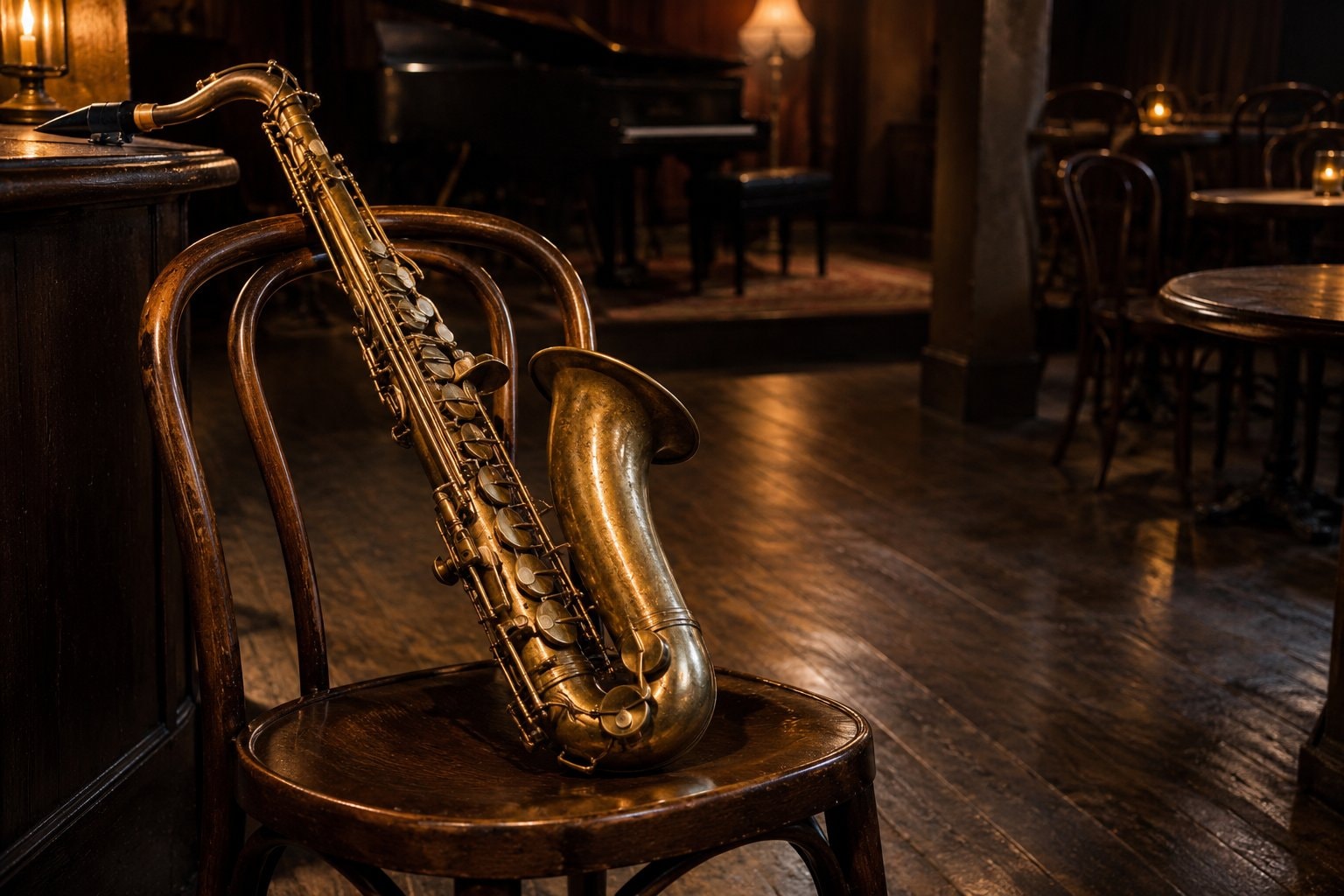
A gathering place run by Jimbo Edwards
The club history describes Edwards beginning with a café and creating a larger performance room at musicians’ urging. That origin puts the music room within an everyday neighborhood business, rather than a purpose-built concert building. The stage was part of a back room in a house. The contrast in scale is useful when reading about the Fillmore’s musical life: a small setting could become an important meeting point for a much larger circle of players.
Wikipedia’s account also describes Edwards rejecting racial discrimination in the room. It places that practice against the barriers Black musicians faced in other entertainment settings. Bop City’s openness therefore belongs to a specific historical context. It should not become a claim that the wider city had no racial restrictions. The same musical world could contain exclusion in one place and a more integrated gathering in another.
Visitors and house musicians
The article names Billie Holiday, Louis Armstrong and Charlie Parker among the popular performers heard at Bop City. Its fuller list includes Duke Ellington and John Coltrane, while John Handy appears as a house musician. These names describe different relationships to the club: visitors who came through, and a player whose early career developed within its regular musical setting. The distinction keeps the local scene in view alongside the touring stars.
The same account records a meeting between Armstrong and Parker at the club, with Armstrong arriving after his own concert while Parker was playing. That episode expresses the club’s connecting role without needing to turn it into an imagined scene. The source establishes who met and where. It does not require an invented conversation, a description of their feelings or an imagined account of the sound in the room.
What a jam session made possible
Wikipedia’s article on the jam session describes an informal musical activity built around improvised solos and shared tunes or chord progressions. Musicians may draw on familiar material rather than a fully arranged performance. The form allows a gathering to take shape through musical exchange. In Bop City’s history, that definition helps explain why the room could bring together players from different engagements without functioning like another scheduled concert.
A jam session can range from a loose gathering to a more selective meeting among experienced performers. The source describes both social exchange and communal practice. These are useful distinctions for a listener: improvisation need not mean music without a shared structure, and an informal setting need not imply an absence of skill. The agreed tune or harmonic pattern can provide the ground on which individual players develop different musical ideas.
Wikipedia’s account of bebop describes intricate melodies, complex harmonies and a prominent role for improvised solos. It also describes a common performance shape in which a melody leads into solos before returning at the end. That musical account complements the history of the room. Bop City’s importance to modern jazz becomes easier to understand when its gatherings are considered alongside the musical possibilities players were exploring.
A house that continued, a room that did not
The club closed as interest in jazz declined, according to its Wikipedia history. Redevelopment then altered the physical setting. The Victorian house was moved, but the account states that the back room where Bop City had operated was demolished. A surviving building and a surviving performance space are therefore different things here. The house carries a connection to the club without containing an unchanged version of its late-night room.
The building later housed Marcus Books. Wikipedia’s article on Marcus Books describes an independent, family-owned bookstore concerned with African American literature, history and culture, and an important community space. That later use connects the house to another form of Black cultural life. It adds to the building’s history while keeping the bookstore and the jazz club distinct institutions, with different activities and different relationships to their readers and listeners.
Read the Fillmore jazz era for the network around the club and the redevelopment account for changes to the surrounding streets. The jazz styles page takes improvisation and bebop further. Together, those subjects place Bop City’s back room within a neighborhood, a changing city and a musical form built around the exchange of ideas.